An undermount apron sink combines two demanding installation requirements in one system. The sink must be supported structurally from the cabinet, while the rim must align precisely under the countertop cutout, and the apron front must sit cleanly against the cabinet face with the correct reveal. Unlike top-mount sinks, you cannot rely on the countertop to carry the load, and unlike standard undermount bowls, you must also manage the front apron geometry and the cabinet cutout tolerance.
Rocky apron-front sinks are designed for kitchen programs where a consistent front appearance and stable under-counter integration matter. This guide explains a professional installation workflow that reduces fit risk, protects countertop edges, and improves long-term stability. For product configurations and apron styles, refer to: Apron Front Sink
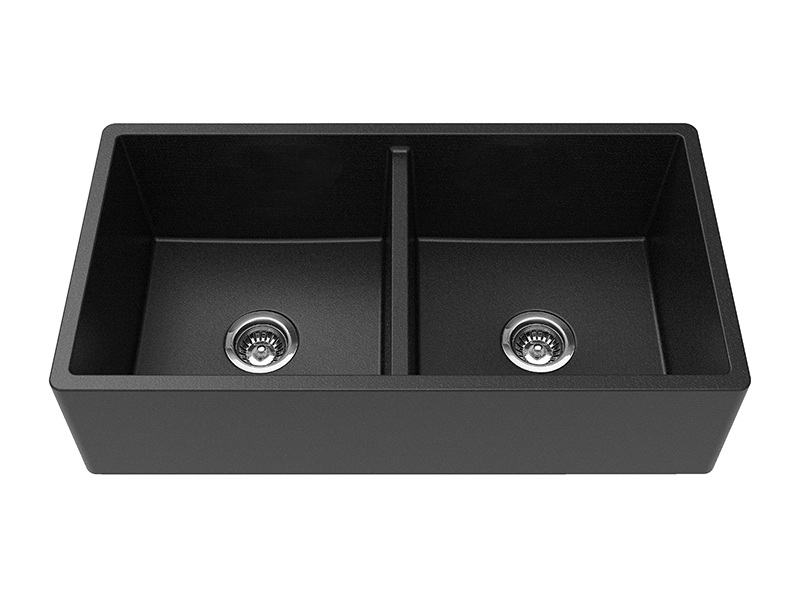
Undermount apron sink installation begins with planning the opening as a system. The cabinet front cut must match the apron dimensions, while the countertop cutout must match the sink rim geometry and the chosen reveal style. The most common installation problems come from treating these cuts as separate tasks.
Start by confirming the cabinet type and the sink base dimensions. Such as a cabinet labeled 36 inches is usually nominal, and internal width varies by construction style. Frameless cabinets generally provide more interior clearance, while face-frame cabinets require tighter front opening control. The front opening determines how the apron will sit visually. A clean, square cut is essential because the apron face is exposed and becomes part of the final cabinet line.
Next, define the countertop reveal. For Undermount Sinks, the reveal is the relationship between the countertop edge and the sink rim. A zero reveal aligns the countertop edge to the sink rim. A negative reveal slightly overhangs the rim, hiding the rim line and improving wipe-in behavior. A positive reveal exposes the sink rim and is less common in modern kitchens. The reveal choice affects how the fabricator cuts the stone and how the installer positions the sink.
Before cutting, confirm drain position and plumbing clearance. Apron sinks may shift the bowl forward or change the drain centerline relative to standard sinks. If the drain alignment is not checked early, installers may be forced to compromise on sink position to make plumbing fit, which can ruin apron alignment at the front.
Cut planning checklist
| Planning Item | What To Confirm | Why It Matters |
|---|---|---|
| Cabinet Internal Width | Inside-to-inside cabinet sides | Ensures the sink body clears the cabinet |
| Apron Opening Dimensions | Front cut width and height | Controls visible apron alignment |
| Countertop Reveal Style | Zero, negative, or positive reveal | Determines cutout and final look |
| Drain Location | Centerline and rear clearance | Prevents plumbing interference |
| Faucet And Accessories | Hole layout and clearances | Avoids conflicts after install |
The sink must be supported by the cabinet, not by the countertop adhesive. A reliable undermount apron sink installation uses a load-bearing platform or rail system that carries the full sink weight plus water load and cookware impact loads.
A platform support approach uses a rigid deck inside the cabinet that the sink sits on. This approach provides strong load distribution and is often preferred for heavier sinks and for programs where repeatability is important. A rail support approach uses side cleats or rails fastened to cabinet walls, with the sink resting on those rails and additional front and rear reinforcement where needed. In either case, the support must be level, square, and structurally tied to cabinet framing rather than decorative panels.
Key support principles:
The support surface must be level in both directions so the sink does not twist
The front apron must be braced so it does not shift during countertop installation
The support must allow fine height adjustment to achieve the reveal and countertop seam quality
Fasteners should anchor into structural members with correct length and spacing
If the sink support is too high, the countertop may not seat or the reveal will be wrong. If too low, the rim-to-stone gap becomes large, requiring excessive sealant that is visually poor and more likely to fail. The correct approach is to build in adjustment capability so the sink can be positioned precisely before final sealing.
Once the support is built, dry-fit the sink and confirm apron alignment before any adhesive or sealant is applied. This stage determines whether the finished kitchen looks professional.
Positioning workflow:
Place the sink on the support and center it left to right
Confirm the apron face sits in the intended plane relative to the cabinet face
Adjust sink height so the rim aligns to the countertop cutout with the chosen reveal
Confirm the sink is square to the cabinet front line so the apron does not appear rotated
Re-check drain alignment and trap clearance with plumbing rough-in
The reveal must be consistent from front to back and side to side. If the countertop is stone, small changes in height can cause visible gaps or uneven seams. If the countertop is composite or solid surface, the reveal still matters for wipe-in performance and seal durability.
Apron alignment is equally important. The apron should be level and centered, and the side reveals should be symmetrical. For multi-unit installations, installers often use a template and measurement references from the cabinet face rather than relying on eyeballing.
When the sink position is confirmed, final mounting and sealing should be treated as a durability process, not just a cosmetic step. The goal is a stable mechanical lock, a clean sealed joint, and a drainage system that does not stress the sink body.
A typical finishing sequence includes applying a continuous bead of appropriate sink sealant at the rim contact area, then bringing the countertop into position. The sink should be clamped or braced to maintain alignment while the sealant cures, depending on the countertop system and installer method. Mechanical retention should always be present. Sealant alone should not be the only thing holding the sink.
After curing, connect the drain and test. A practical test includes filling the sink partway and checking for movement at the rim, then draining while inspecting the drain connection and trap zone for leaks. Confirm that the sink does not shift under load and that the apron remains aligned with the cabinet face after the plumbing is tightened.
Final installation checks:
Rim-to-countertop seam is continuous with no gaps
Sealant line is controlled and not oversized
Sink does not move when pressed at corners
Drain alignment is correct without forcing fittings
Apron face remains level and centered
Rocky apron-front sinks are designed to support these installation methods through stable geometry and project-friendly configurations. For available styles and configurations, refer to: Apron Front Sink
Installing an undermount apron sink requires coordinated planning between cabinet opening, support construction, sink positioning, and countertop cutout. The most reliable workflow is to confirm cabinet internal dimensions and reveal style first, build a level load-bearing support system with adjustment capability, dry-fit and align the apron and rim precisely, then seal and mechanically retain the sink before completing drain connections and load testing. When these steps are controlled as a system, the sink stays stable, the apron line looks clean, and the rim seal remains durable.
If you are specifying undermount apron sinks for a project rollout or want to standardize installation across multiple kitchens, Rocky can support sink selection, dimensional confirmation, and configuration matching based on your cabinet drawings and countertop plan. Send us your cabinet type, internal width, countertop material, target reveal style, and quantity range, and we will recommend suitable apron-front sink options and provide a quotation for your inquiry.

 Mobile Phone:
 Contact Now