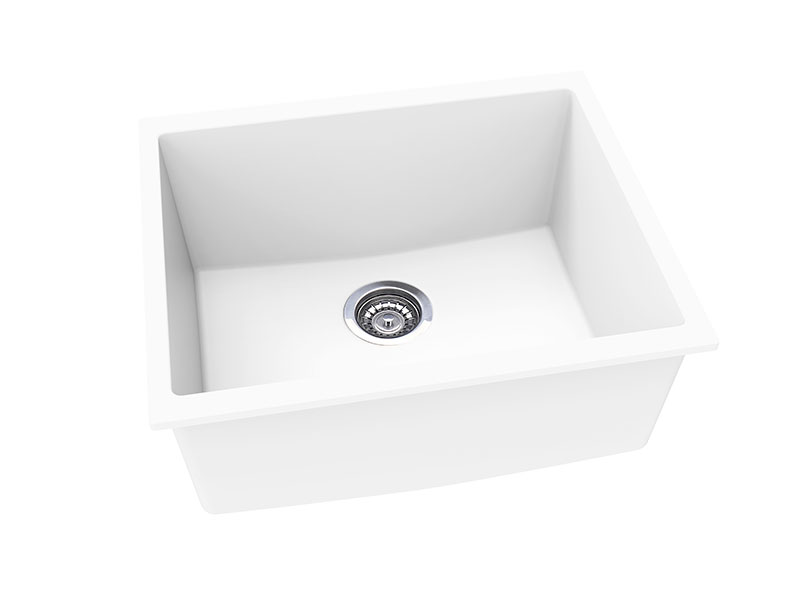
Quartz sink stains are usually caused by surface deposits rather than permanent material damage. In most kitchens, discoloration comes from mineral residue, grease films, metal transfer, or food pigments that remain on the surface too long. Cleaning effectively is not about stronger chemicals, but about using the correct method for each stain type while protecting the sink’s surface texture and color consistency.
At Rocky, we design quartz sinks with stable surface structure and uniform pigmentation so stains are easier to remove and daily maintenance remains predictable, even in high-frequency use environments. For available models and configurations, refer to: Quartz Sink Products
Why stain identification matters
Before cleaning, it is important to understand what kind of stain you are dealing with. Quartz sinks do not absorb liquids easily, so most stains sit on the surface rather than penetrating the material. Using the wrong cleaning approach can dull the finish and make future stains harder to remove.
Common stain sources in daily use
Mineral deposits from hard water often appear as white haze or rings, especially around the drain and overflow areas. Grease and soap residue form thin films that cause dull or uneven patches. Metal cookware can leave gray scuff marks that look like scratches but are usually transfer residue. Food and beverage pigments such as coffee, tea, wine, and sauces may leave localized dark marks if not cleaned promptly.
Correct diagnosis allows targeted cleaning without unnecessary abrasion.
Removing mineral haze and limescale
Mineral stains respond best to gentle descaling. Apply a non-abrasive descaling cleaner suitable for kitchen surfaces, allow a short contact time, then wipe and rinse thoroughly. Drying the sink immediately after rinsing prevents new mineral marks from forming.
Eliminating grease film and dull areas
Grease and soap buildup requires a mild degreasing step. Apply a gentle degreaser with a soft cloth or sponge, work evenly across the affected area, then rinse completely and wipe dry. This restores a consistent surface appearance.
Clearing metal transfer marks
Gray scuffs from pots and pans are usually metal residue rather than surface damage. A non-scratch cream cleaner applied with light pressure can lift these marks. Clean in small sections, rinse, and dry to confirm removal.
Treating food pigment stains
For coffee, wine, or sauce stains, use a spot-clean approach. Apply a compatible cleaner to the stained area, allow controlled dwell time, then wipe, rinse, and dry. Repeat if needed instead of increasing scrubbing force.
Stain treatment reference
| Stain Type | Typical Location | Recommended Action |
|---|---|---|
| White haze or rings | Drain and water line zones | Gentle descaling, dry after rinse |
| Dull patches | Basin bottom and corners | Mild degreasing, full rinse |
| Gray scuffs | Cookware contact areas | Non-scratch cream cleaner |
| Dark food marks | Local spill zones | Controlled spot cleaning |
Why aggressive tools cause long-term issues
Steel wool, rough abrasive pads, and gritty powders can change the surface texture of a quartz sink. Once the surface is scratched or roughened, it attracts residue more easily and becomes harder to clean consistently.
Chemical misuse risks
Avoid leaving strong cleaners on the sink surface for extended periods. Long dwell times can dull the finish and create uneven coloration. Mixing different cleaning products does not improve effectiveness and may create safety hazards.
Thermal stress considerations
Pouring boiling water directly into an empty sink can stress the material over time. Running cold water simultaneously helps reduce thermal shock and supports long-term surface stability.
Daily maintenance habits
Rinse the sink after use, clean with mild detergent and a soft cloth, rinse thoroughly, and wipe dry. Drying is essential to prevent mineral spotting and film buildup.
Periodic deep cleaning
In hard-water areas or busy kitchens, weekly deep cleaning helps prevent long-term haze and discoloration. Consistency is more effective than occasional aggressive cleaning.
Surface protection strategies
Using sink grids or protective mats reduces metal transfer and impact wear. Rotating cleaning routines across shifts ensures uniform maintenance in shared or commercial kitchens.
Rocky quartz sinks are engineered for consistent cleaning behavior, making them suitable for projects where appearance stability and maintenance efficiency are critical. For product options and specifications, refer to: Quartz Sink Products
For OEM or private label programs, we support customization in size, bowl configuration, and surface texture to match different market and usage requirements while maintaining predictable cleaning performance.
Cleaning quartz sink stains effectively depends on identifying the stain type and applying a targeted, non-abrasive method. Mineral haze, grease film, metal transfer, and food pigments each require a specific approach, combined with thorough rinsing and drying. Consistent daily care and periodic deep cleaning preserve surface appearance and extend service life.
If you are sourcing quartz sinks for residential projects, hospitality applications, or a bulk procurement program, Rocky can support model selection, customization, and stable supply planning. Share your preferred sink configuration, finish requirements, and order volume, and we will recommend suitable options and provide a quotation for your inquiry.

 Mobile Phone:
 Contact Now