White quartz sinks are admired for their bright, clean appearance and ability to match nearly any kitchen style. Their smooth, polished color tone elevates both modern and traditional kitchens, making them a popular choice for homeowners and designers. But because white surfaces are often associated with visible marks or discoloration, many people ask whether white quartz sinks stain easily. Understanding how quartz material behaves can help homeowners maintain its beauty and choose the right sink for long-term use.
ROCKY manufactures durable quartz sinks—including top-mount models, undermount designs, and apron-front farmhouse sinks—engineered to resist stains, discoloration, and surface wear.
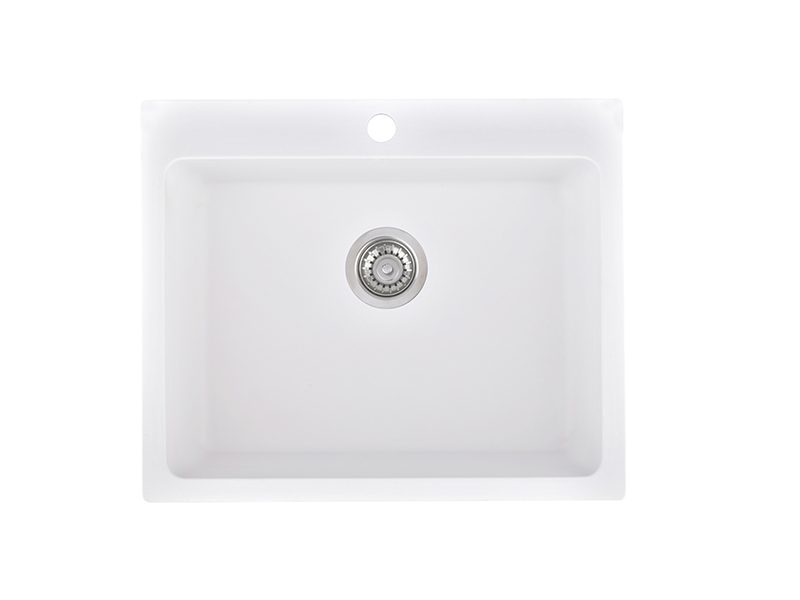
Quartz sinks are engineered using a mixture of quartz minerals and high-quality resins that create a dense, nonporous surface. Unlike natural stone or porous ceramic, quartz does not absorb liquids or pigments. This nonporous quality plays a major role in stain resistance, ensuring that dark-colored liquids remain on the surface rather than penetrating the material.
Even when exposed to strong kitchen ingredients such as coffee, wine, tea, tomato sauces, or citrus juices, white quartz sinks maintain their color when properly cleaned. Stains typically remain superficial and can be removed using mild detergent and water. ROCKY enhances this natural resistance by refining the mineral composition and surface texture of each quartz sink to prevent microscopic absorption.
Temporary discoloration on white quartz sinks is usually not true staining but surface residue. Everyday kitchen activities can leave behind color pigments that cling to the basin. Coffee grounds, curry spices, red sauces, and even metal cookware can create surface marks, but these do not penetrate into the quartz body.
These marks often occur because white surfaces highlight contrast more than darker tones. The visibility of residue leads to the misconception that quartz sinks stain easily. However, once the residue is wiped away, the original white finish remains unchanged.
To support long-term clarity, ROCKY’s undermount quartz sinks use stable pigments and uniform mineral distribution to reduce surface dulling and color inconsistencies.
Different sink materials vary in how they respond to food pigments and cleaning agents. The table below compares white quartz sinks with other common kitchen sink options:
| Sink Material | Stain Resistance Level | Reason for Staining or Protection |
|---|---|---|
| Quartz Sink | Excellent | Nonporous; pigments cannot penetrate material |
| Stainless Steel | High | No staining but shows water spots and discoloration |
| Porcelain / Ceramic | Moderate | Can absorb pigments through microcracks |
| Natural Granite | Variable | Porous; requires sealing to prevent stains |
| Composite Sink | Good | Depends on resin quality and pore structure |
Quartz consistently performs well because of its engineered structure. This is one of the reasons ROCKY uses controlled mineral and resin ratios to create a dense surface in all its quartz sink collections.
Day-to-day use often involves exposure to colorful foods, oils, and metal utensils. A sink must be able to handle these without losing its appearance. White quartz sinks perform well because they resist both staining and long-term discoloration.
Even if the sink is used to soak cookware or wash spices, a simple cleaning routine helps maintain its brightness. The material does not react chemically with kitchen ingredients, nor does it weaken from repeated exposure to moisture. ROCKY’s apron-front sinks are especially durable in busy kitchens, where heavy usage could otherwise lead to staining concerns.
Although quartz sinks are highly stain resistant, good maintenance habits help preserve their white appearance. Quartz sinks do not require sealing, polishing, or bleaching. Instead, simple daily cleaning keeps the surface fresh.
A typical cleaning routine includes:
Rinsing the sink after washing dishes
Using mild soap and a soft sponge to remove residue
Avoiding long-term contact with highly pigmented substances
Wiping dry to prevent mineral deposits
These steps prevent surface buildup, not actual staining. ROCKY designs its quartz sinks so that cleaning requires minimal effort, even for white finishes.
True stains on quartz sinks are extremely rare but may occur if certain conditions are met. Long-term stains typically result from leaving dark foods or chemicals resting on the surface for extended periods—such as days rather than hours. Even in these cases, discoloration often affects only the surface layer and can be removed with targeted cleaning.
Long-term exposure to harsh chemicals, such as industrial cleaners, may cause temporary color shifts, but these are avoidable with proper care. ROCKY’s quartz formula maintains stability in normal kitchen conditions, ensuring colorfast performance.
It is important to distinguish staining from damage. High heat or corrosive chemicals can sometimes cause surface discoloration, which is not staining but material damage. Unlike water-based pigments, these effects alter the surface chemically.
Heat marks or chemical etching usually occur only when improper materials are used—such as placing extremely hot cookware directly onto the sink or applying concentrated bleach for prolonged periods.
White quartz sinks from ROCKY are formulated to resist everyday temperatures and common household cleaners, making such incidents unlikely with normal use.
Both light and dark quartz sinks have the same stain-resistant structure. The difference lies in visibility, not performance. Dark sinks may hide residue more easily, while white sinks show it more clearly. This does not indicate that white quartz stains more easily—it simply highlights marks that other colors might conceal.
Because the underlying material is equally nonporous, color does not influence long-term stain resistance. The pigments used in ROCKY’s top-mount quartz sinks and other series are fully integrated into the composite, ensuring that color stability is consistent across all shades.
Quartz sinks maintain their color exceptionally well. They do not yellow, fade, or absorb food pigments. Their engineered consistency ensures that white finishes retain brightness even after years of use.
Factors that support long-term appearance include:
UV-stable pigments
Dense mineral structure
Scratch-resistant surface
Resin binders that prevent porosity
ROCKY’s production process ensures that each sink undergoes controlled curing to maximize durability and color longevity.
White quartz sinks do not stain easily because quartz is a nonporous, engineered material designed to resist pigment absorption. Most surface marks come from temporary residue, not permanent staining. With routine cleaning, white quartz sinks remain bright and clean throughout their lifespan.
ROCKY’s top-mount, undermount, and apron-front quartz sinks are manufactured using stable mineral compositions and high-quality pigments to ensure exceptional stain resistance and long-term color performance.
For homeowners who love the aesthetic of a white sink but worry about maintenance, quartz provides the perfect balance of beauty, durability, and reliability.

 Mobile Phone:
 Contact Now