Quartz sinks have become increasingly popular in modern kitchen design due to their clean appearance, wide color options, and engineered-stone performance. One of the most common questions homeowners ask is whether a quartz sink is truly durable enough to withstand daily cooking, cleaning, and long-term wear. Understanding the material’s structure, resistance properties, and real-world performance helps clarify why quartz sinks are considered one of the strongest choices for residential and commercial kitchens.
ROCKY manufactures high-performance quartz sinks—including undermount designs and apron-front farmhouse models—engineered for exceptional durability, stability, and appearance consistency.
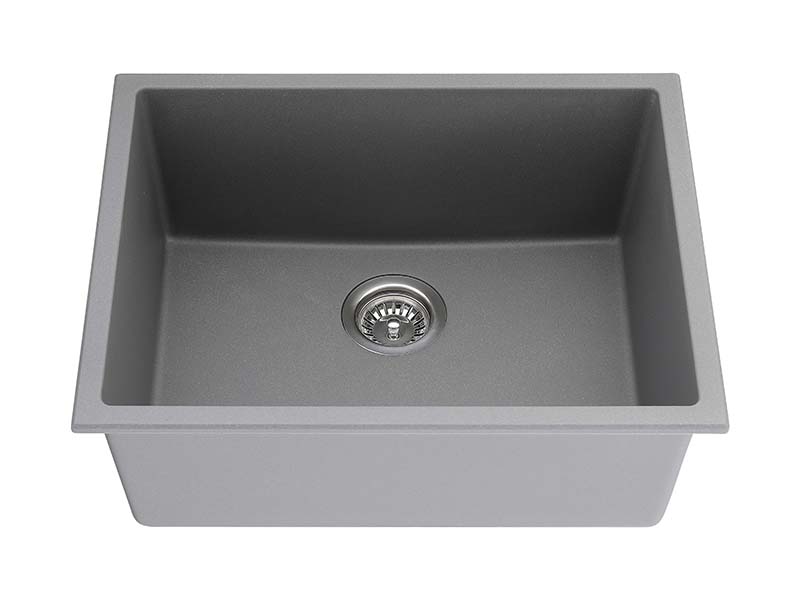
Quartz sinks are created from a blend of quartz stone particles and high-quality resin binders. This engineering process creates a material that is extremely dense and resistant to impact. Because the structure is molded under high pressure, the final surface has very low porosity, meaning it does not absorb liquids or weaken over time.
This dense, stone-like composition gives quartz sinks an advantage over lightweight composite sinks and even some natural-stone surfaces. The uniform structure allows the sink to distribute force evenly, reducing the likelihood of cracks. ROCKY’s production methods optimize mineral balance and curing temperature, resulting in sinks designed to remain stable even under heavy kitchen usage.
Quartz sinks offer excellent durability in the three areas that most homeowners care about: heat, scratches, and stains. Although no sink material is fully indestructible, quartz consistently performs well under stress. Its heat resistance allows brief contact with hot pots or pans, and its surface hardness protects against common kitchen utensils.
Stain resistance is another strong advantage. Because the sink is nonporous, pigments from coffee, wine, spices, or cleaning agents cannot penetrate the surface. Most stains can be removed with mild soap and water. Compared with stainless steel or certain natural-stone sinks, quartz typically shows fewer long-term discoloration issues.
ROCKY’s apron-front quartz sinks are particularly valued in farmhouse-style kitchens where heavy cookware is common. The thickness and stability of the sink body help resist damage from high-volume use.
Durability is ultimately measured not in lab tests but in daily routines. A quartz sink must cope with dishwashing, vegetable washing, temperature shifts, abrasive sponges, cleaning chemicals, and frequent water exposure. In these real-world conditions, quartz sinks excel because the surface does not weaken, soften, or warp when exposed to moisture or long-term cleaning.
Homeowners who cook frequently appreciate that quartz sinks maintain their structural integrity even when loaded with heavy cookware. Unlike stainless steel, which can dent, or porcelain, which may chip, quartz provides a stable basin that lasts for years. ROCKY designs its undermount quartz sinks to remain anchored securely beneath countertops, ensuring solid support even when the basin is full.
The table below shows how quartz compares with other common sink materials:
| Sink Material | Durability Level | Vulnerabilities | Long-Term Performance |
|---|---|---|---|
| Quartz Sink | Excellent | Mild heat sensitivity in extreme cases | Very stable |
| Stainless Steel | Good | Prone to dents and noise | Reliable |
| Porcelain / Ceramic | Moderate | Chips and cracks from impacts | Variable |
| Granite Composite | High | May require more maintenance | Strong |
| Cast Iron | Excellent | Enamel may scratch or dull | Long-lasting |
Quartz consistently ranks high because of its engineered density and nonporous surface, providing a balanced combination of strength and practicality.
Some sink materials deteriorate when exposed to strong cleaners, but quartz sinks handle most household cleaning solutions well. The resin matrix protects the minerals from chemical reaction, while the smooth surface prevents buildup. This chemical resistance contributes significantly to long-term durability, especially in kitchens where sanitation is important.
However, as with any material, extremely harsh industrial chemicals are not recommended. Mild detergents or gentle abrasive pads are usually sufficient. ROCKY’s quartz sinks undergo formulation testing to ensure resistance to common kitchen cleaners, maintaining surface appearance for years.
Because quartz sinks are nonporous, they do not absorb odors or harbor bacteria inside microscopic pores. This property prevents the internal material from weakening or degrading. It also supports hygiene, making quartz a reliable choice for families and commercial food preparation spaces.
Over time, materials that absorb moisture may crack or stain internally. Quartz eliminates this risk entirely. The smooth surface keeps contaminants on the outer layer, where they can be easily cleaned.
The finish of a quartz sink—whether matte, satin, or textured—does not significantly change its underlying durability. However, finishes do influence how well the sink hides scratches or daily wear. Matte finishes conceal small markings better, while satin finishes show smooth depth of color.
ROCKY applies consistent molds and stable mineral blends to ensure that every finish provides equal structural strength. Whether selecting an undermount or apron-front design, durability remains dependable regardless of aesthetic choice.
Durability is influenced not only by material composition but also by installation design. Undermount quartz sinks support weight differently than top-mount or apron-front models. The stability of the installation ensures the sink will not loosen, sag, or shift under heavy loads.
ROCKY’s undermount quartz sinks are engineered with reinforced rims that bond securely to the countertop, while apron-front sinks distribute weight outward, reducing stress on cabinetry. These structural features contribute to long-term durability by preventing mechanical failure rather than relying solely on material strength.
A durable sink must maintain its appearance as well as its structure. Quartz sinks are known for resisting discoloration from UV exposure, kitchen dyes, and mineral deposits. Their pigments are integrated into the material mixture, so color remains stable instead of fading or peeling.
While stainless steel may scratch and porcelain may lose shine, quartz maintains consistent color and texture even after decades of use. ROCKY carefully controls pigment dispersion during manufacturing to ensure long-term color accuracy.
Quartz sinks are among the most durable options available for modern kitchens. Their engineered stone composition offers high resistance to scratches, stains, heat, and structural damage, while their nonporous surfaces prevent odor and bacterial absorption. Whether used in busy households or professional cooking environments, quartz sinks deliver long-term performance that outlasts many alternative materials.
ROCKY’s undermount quartz sinks and apron-front farmhouse sinks are manufactured with advanced molding and mineral-stabilization processes that ensure long-term durability, consistent color, and dependable daily use.
For homeowners seeking a reliable, attractive, and low-maintenance sink material, quartz remains one of the strongest choices available.

 Mobile Phone:
 Contact Now