Choosing between quartz and granite sinks is one of the most common decisions homeowners face when designing or upgrading a kitchen. Both materials offer durability, modern appeal, and high-value performance, yet they differ significantly in how they are manufactured, maintained, and used over time. Understanding these differences helps homeowners, designers, and builders make the right choice for daily use, long-term reliability, and overall style. This article examines the characteristics of each material and compares them across essential performance categories.
As a professional sink manufacturer, ROCKY provides premium quartz sinks in multiple installation styles—including our high-quality top-mount quartz sinks—engineered for strength, aesthetics, and long-term kitchen performance.
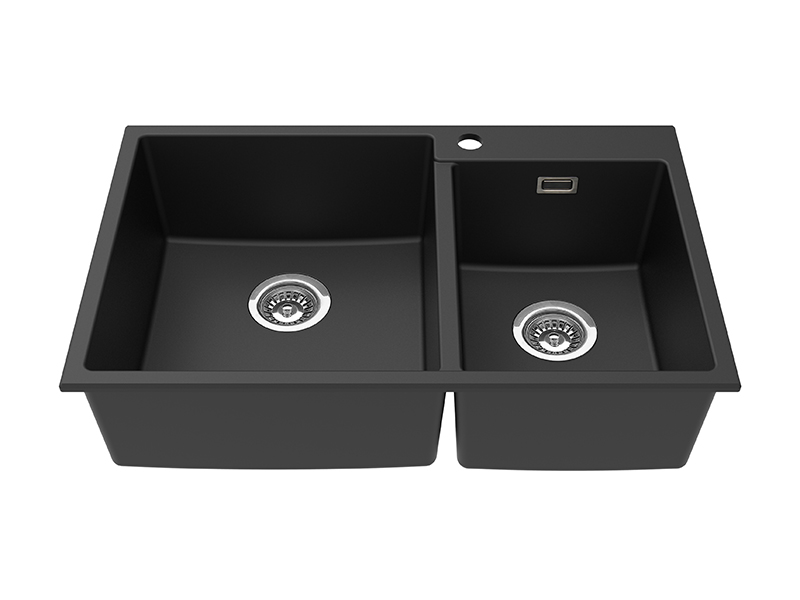
Quartz sinks are engineered stone products made from resin and finely ground quartz minerals. This uniform composition enables consistent color, a smooth surface, and strong resistance to stains and scratches. The resin component enhances flexibility, reducing the chance of cracking under impact.
Granite sinks, by contrast, may be either natural carved granite or composite granite. In many modern kitchens, granite composite sinks are the most common. They consist of stone particles fused with resin but usually have a higher percentage of natural rock. This results in a more textured look and a slightly more porous structure compared to quartz.
Because quartz sinks undergo more controlled engineering during production, their finish tends to be smoother and more consistent. ROCKY’s manufacturing process uses stable mineral ratios and precision molding to achieve dense, durable sink surfaces that withstand years of everyday use.
Aesthetic preference plays a major role when choosing a sink. Quartz sinks offer clean, sleek surfaces ideal for modern, minimalist, or contemporary kitchen styles. Their color consistency also makes them easy to match with countertops, cabinetry finishes, and hardware.
Granite sinks, especially those using higher natural-stone content, emphasize organic texture. Their slight variations in grain and tone can add character, but may not appeal to homeowners who prefer uniformity.
For kitchens requiring visual harmony, quartz sinks provide a predictable appearance across multiple units. This is particularly valuable in large projects where sink colors must match consistently. ROCKY’s top-mount quartz sinks are designed to maintain uniform color density, ensuring aesthetic continuity throughout installations.
Durability is one of the strongest advantages of quartz sinks. They resist scratches, stains, impact, and heat better than many natural stone sink options. While no material is fully immune to damage, quartz composite structures distribute force evenly, reducing the risk of localized cracks.
Granite sinks are also durable but may contain small natural pores that require sealing or more frequent cleaning. These pores can occasionally trap residue or lead to dulling over time if not properly maintained.
Quartz sinks benefit from a resin matrix that forms a nonporous barrier, making them easier to clean and less prone to absorbing oils or pigments. ROCKY’s quartz sinks incorporate dense mineral formulas that improve hardness while maintaining a pleasant surface feel.
Quartz sinks are known for low maintenance. Their nonporous surface prevents bacteria buildup and allows routine cleaning with mild detergents. They retain color well and resist discoloration from food acids, coffee, or strong kitchen spices.
Granite sinks, depending on their composition, may require sealing to maintain water resistance. Their textured surfaces can accumulate soap film or mineral deposits more quickly, requiring deeper cleaning efforts.
A simple overview is provided below:
| Sink Material | Maintenance Level | Key Considerations |
|---|---|---|
| Quartz Sink | Low | Easy to wipe; nonporous; stain-resistant |
| Granite Sink | Moderate | May require sealing; more texture to clean |
ROCKY designs quartz sinks specifically for long-term convenience, making them ideal for busy households that value easy upkeep.
Both materials offer excellent resistance to kitchen hazards, but quartz generally provides more balanced performance. While granite composite handles high heat well, certain natural-granite sinks may crack from sudden temperature changes.
Quartz sinks maintain strong thermal resistance while also offering higher impact flexibility. Their engineered nature allows them to absorb shock better, making them suitable for households where heavy cookware is frequently used.
ROCKY’s quartz sinks undergo controlled curing processes that strengthen temperature stability and reduce brittleness.
Quartz sinks typically weigh less than natural granite, simplifying installation. Their predictable dimensions and stable density make them suitable for a wide range of countertop types, including laminate, solid surface, and engineered stone.
Granite sinks, especially those carved from natural stone, can be significantly heavier, which may require reinforced cabinetry or specialized installation support. Composite granite sinks weigh less but may still pose challenges for DIY installations.
ROCKY’s top-mount quartz sink series provides universal compatibility with standard countertop cutouts, making them accessible for renovation projects or new builds.
Quartz sinks are known for excellent UV stability and long-term color retention. Their engineered composition ensures that pigments remain evenly distributed within the material, preventing fading and patchiness.
Granite sinks may gradually fade in areas exposed to strong sunlight or heavy cleaning agents. Certain natural-stone variants may also show subtle color inconsistencies as they age.
Quartz sinks from ROCKY maintain their appearance over time because color pigments are blended thoroughly into the mineral mix before molding.
Quartz sinks usually offer a balanced cost-to-performance ratio. They provide durability, low maintenance, and consistent aesthetics at a price point accessible to most homeowners.
Granite sinks carved from natural stone are often more expensive due to material extraction and processing. Composite granite sinks fall closer to quartz in price but may vary based on stone content and brand consistency.
For projects seeking reliable performance without premium natural-stone cost, quartz sinks represent a cost-effective alternative.
Nonporous quartz sinks are naturally hygienic because they do not harbor bacteria or moisture within microscopic pores. This helps maintain food safety and reduces the risk of odor buildup.
Granite sinks with porous surfaces may require ongoing sealing to ensure similar hygiene levels. Without sealing, oils and residues can penetrate deeper and become difficult to remove.
ROCKY’s quartz sinks include smooth interior walls that make daily cleaning more efficient and prevent long-term staining.
Below is a simplified comparison highlighting key differences:
| Category | Quartz Sink | Granite Sink |
|---|---|---|
| Durability | Excellent; impact-resistant | High; may crack under sudden heat shock |
| Maintenance | Low; no sealing required | Moderate; sealing may be needed |
| Aesthetic Uniformity | Very consistent | Natural variations are common |
| Weight | Moderate | Heavy, especially natural granite |
| Hygiene | Superior; nonporous | Requires maintenance to stay hygienic |
| Installation | Straightforward | May require reinforcement |
| Color Stability | Excellent | May fade with time |
This comparison shows quartz sinks as the more predictable, user-friendly option for most households and commercial settings.
Quartz sinks are generally the better choice for homeowners seeking a durable, low-maintenance, modern-looking sink with consistent performance. Their engineered composition ensures stability, hygiene, and long-lasting beauty, making them ideal for everyday kitchen use.
Granite sinks appeal to those who prefer natural-stone aesthetics and are willing to invest in additional maintenance. They offer unique texture and character but may vary in performance depending on stone composition.
For most modern kitchens, quartz sinks provide superior value, convenience, and reliability. ROCKY’s top-mount quartz sink collection delivers professional-grade durability and refined styling, making it a strong choice for builders, designers, and homeowners seeking long-term satisfaction in their kitchen design.

 Mobile Phone:
 Contact Now