A Shower Niche looks simple on the surface, but once it’s installed, every small detail shows. If the edges aren’t straight, if water sits inside, or if the finish feels rough, it stands out right away. That’s why building a niche is less about cutting into the wall, and more about getting the structure and fit right from the beginning.
These days, many projects avoid building niches entirely on site. Instead, they use a preformed recessed unit that already has the shape, depth, and finish ready to go. It removes a lot of uncertainty during installation and gives a cleaner result once everything is tiled in. That’s also why people comparing different options often come across solutions like shower niche styles, where the idea is to simplify the process and keep the final result consistent.
The first decision is always placement. A niche should be easy to reach when standing under the shower, but it also needs to sit well within the tile layout. If it lines up with grout lines, the wall looks balanced. If it’s slightly off, the whole space can feel uneven even if everything else is done well.
Most installers try to balance these two things at once. It has to feel natural to use, and it has to look right visually. That’s why the position is usually planned before any cutting begins.
Once the location is set, the wall opening needs to be accurate. This is where problems often start. If the cut is uneven or slightly off-size, the niche won’t sit properly. That affects both how it looks and how it seals.
A good fit should feel natural. Not forced in, not loose, just clean and aligned. When the opening matches the niche dimensions properly, the rest of the installation becomes much easier.
Building a niche completely on site depends heavily on the installer. Even small differences in framing or waterproofing can change the final result. One project may turn out clean, another may not.
That’s why more buyers prefer a ready-made recessed niche. It already has the correct shape, edge definition, and internal structure. The installer doesn’t have to build everything from scratch inside the wall.
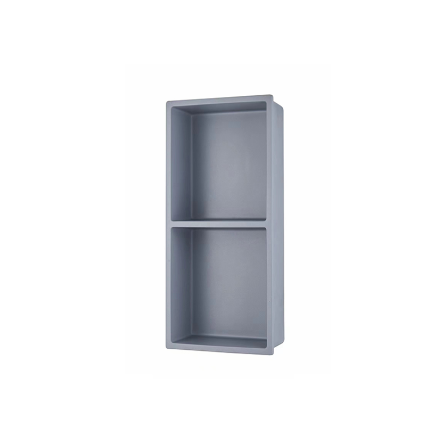
Our product follows that same idea. It’s a quartz recessed niche designed to sit directly into a prepared wall opening. The structure is already formed, so installation focuses more on fitting and sealing rather than construction. For projects, this usually means more consistent results across different sites.
A shower niche sits in a constant wet environment, so waterproofing is one of the most important parts of the process. Even if the niche surface looks solid, the area around it still needs proper sealing.
The connection between the niche and the wall should be treated as part of the waterproof system, not something added at the end. When this step is rushed, problems don’t show immediately, but they appear later as moisture buildup behind the wall.
A well-designed niche also helps manage water inside the storage area. A slight slope at the base allows water to flow out instead of sitting in the corner. It’s a small detail, but it changes how the niche performs over time.
Not all niches hold up the same way after months of use. Some materials start to discolor, soften, or lose their shape in humid conditions. In a shower, that becomes noticeable very quickly.
Quartz gives a more stable result. It keeps its structure, resists moisture better, and stays visually consistent. It also feels more solid compared to lighter materials, which is something users notice in daily use.
For buyers, this isn’t just about appearance. It’s about whether the product still looks good and works well after long-term use.
A niche is meant to make the shower easier to use, not just look better. If the space is too small or too simple, it doesn’t really help. That’s why multi-level designs work better in many bathrooms.
A double-tier niche makes it easier to separate items instead of stacking everything together. It keeps things organized and reduces clutter inside the shower area. In shared bathrooms or project environments, that makes a noticeable difference.
For importers, distributors, and project buyers, a shower niche is not only a design feature. It’s something that needs to install smoothly and perform reliably over time.
Sizing is often the first concern. If dimensions aren’t clear, installation becomes unpredictable. Waterproof compatibility is another. If the niche doesn’t integrate well with the wall system, it creates risk later.
Buyers also look at whether the product can be adjusted for different markets. Some need different sizes, colors, or packaging. That’s where OEM and ODM support becomes important. A supplier who can adapt the product makes it easier to build a complete range instead of relying on a single standard option.
When choosing a shower niche, people usually compare several types before deciding. Some focus on material, some on installation method, and some on overall finish. That’s where options like marmox shower niche designs come into the conversation, because they represent a more structured, preformed approach.
But in the end, the decision usually comes down to practical use. Does it fit easily into the wall? Does it stay clean and stable? Does it simplify installation instead of complicating it? Those are the questions that matter most.
A well-built niche should not feel like an extra feature. It should feel like part of the wall. The edges should line up, the surface should stay easy to clean, and the storage should work without effort.
Most of the time, the best result comes from keeping things simple. A properly sized opening, a solid niche body, and careful sealing do more than complicated design details.
Building a shower niche is about getting the basics right. Placement, fit, waterproofing, and material all need to work together. When they do, the niche becomes a clean and useful part of the shower instead of a weak point.
For buyers working on bathroom products or project supply, a preformed quartz niche makes installation more predictable and the final result more consistent. If you are planning a shower niche range or looking for OEM and ODM support, feel free to contact us. We can help you go through sizing, finish options, and practical setup details so the product fits your market the right way.


 Mobile Phone:
 Contact Now