Quartz Undermount Sinks are popular because they give countertops a cleaner line, make wiping water easier, and bring a more premium look to kitchens, bars, utility areas, and compact wash spaces. Installation, however, is where many projects go right or wrong. A sink may look strong in the catalog, but if the mounting method, cutout tolerance, adhesive choice, and support structure are not handled properly, the result can be movement, leaking, edge stress, or callbacks after delivery.
For buyers working on residential projects, hospitality jobs, dealer orders, or private label programs, installation is not only a site issue. It is also a sourcing issue. When the sink size, bowl depth, countertop opening, and fixing details are clear before production, installation becomes faster and more reliable. That is one reason many buyers prefer to work directly with an undermount sink supplier that can support product matching, OEM sizes, and ODM development for different market needs.
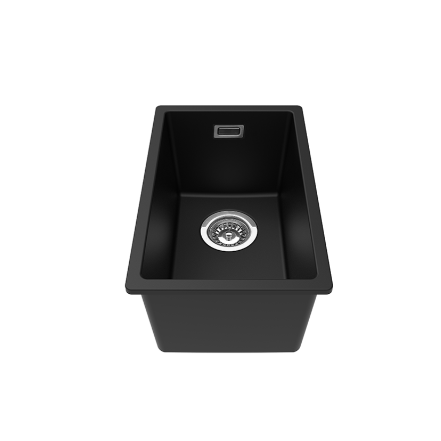
A quartz undermount sink is mounted from below the countertop, so the full weight of the sink and water load depends on the fixing system underneath. This is different from top mount models that rest on the counter surface. With undermount installation, the finish looks better, but the workmanship standard is higher.
This matters even more when using a compact model such as our 11-inch black quartz undermount sink. A small bowl is often selected for secondary prep areas, bar stations, island zones, small kitchens, and limited-space commercial corners. In these projects, every millimeter counts. If the opening is off, the reveal looks uneven. If the support is weak, the sink may shift over time. If the sealing line is poorly done, the finished counter looks cheap even when the product itself is good.
That is why professional installers and project buyers usually focus on three things first: cutout accuracy, support strength, and long-term sealing stability.
Before installation, the first step is to confirm the actual sink size, bowl depth, drain position, and recommended cutout. Our product is a quartz Single Bowl Undermount Sink in black, designed for undermount use with a compact footprint that suits small-space layouts. The dimensions and cutout data should always be confirmed against the final countertop drawing before fabrication starts.
This step sounds basic, but many procurement problems begin here. Some buyers order sinks first and countertop processing starts later with only rough measurements. That creates unnecessary risk for OEM projects, distributor inventory programs, and jobsite installations. A serious supplier should help align sink specs with the installation method early, especially when the buyer is developing a custom range or combining several sink sizes under one collection.
Once the dimensions are confirmed, the countertop fabricator can prepare the opening. The cut edge must be smooth, level, and correctly finished for the chosen reveal style. At the same time, the cabinet below should be checked for enough structural support.
A common mistake is relying only on adhesive. For quartz undermount sinks, that is not enough for a professional result. The better approach is to use a combined fixing method with adhesive sealant plus mechanical support. Depending on the project, that may include mounting clips, support rails, brackets, or a custom frame below the sink. The goal is simple: the sink should remain stable under daily use, temperature change, and cleaning load.
For commercial-grade orders and bulk installations, this point is especially important. Installers want fewer surprises on site. Importers want fewer complaints after delivery. A supplier that understands installation details helps reduce both.
The sink should be dry-fitted first to make sure the alignment is correct. After that, the mounting area must be cleaned thoroughly so the sealant can bond well. Sealant is then applied around the sink rim contact area, and the sink is lifted into place from below.
At this stage, alignment matters more than speed. The bowl should sit evenly under the opening, with consistent edges all around. Once positioned, the sink should be secured with the selected mounting hardware or support system. The installer should not depend on hand pressure alone. The sink needs to be held in place until the bond is fully stable.
After fixing, the excess sealant should be cleaned neatly and the drain connection should be installed. A water test should then be carried out to check sealing performance, drain flow, and overall stability.
For B-end buyers, the main issue is rarely only how to install one sink. The real concern is whether the product can be installed smoothly across repeated orders, different countertop partners, and different market standards. A sink that looks attractive but creates cutting confusion, fitting delays, or after-sales problems is costly.
That is why product consistency matters. For OEM and ODM business, buyers often need support with dimension adjustment, finish planning, packaging coordination, and matching sink lines for different collections. A supplier should not only sell a bowl. The supplier should help make the full sourcing and installation process easier.
Our product range is suited to this kind of cooperation because compact undermount sinks are often used in specialized layouts where standard one-size planning does not work well. Some buyers need small black sinks for apartment kitchens. Some need them for bar projects. Some need them for branded retail or wholesale programs. In each case, installation success begins with correct technical coordination before shipment.
Most installation failures come from avoidable details. One is an inaccurate cutout. Another is weak support under the sink. A third is poor sealing practice or rushing the curing stage. There is also the issue of mismatched expectations between the buyer, fabricator, and installer.
The simple way to avoid these problems is to treat installation as part of product planning, not as an afterthought. Confirm the sink drawing, confirm the cutout, confirm the mounting method, and confirm whether the project needs standard production or custom development. That approach saves time for project buyers, reduces risk for importers, and improves confidence for distributors building a long-term sink range.
Installing a quartz undermount sink is not difficult when the product data, countertop cutout, support method, and sealing steps are all handled correctly. The cleaner finish and stronger design value make undermount quartz sinks a smart choice, but the installation should always be approached with care and proper coordination.
If you are selecting a compact quartz undermount model for your next project, private label plan, or bulk order, we can help you match the sink with the right size, installation details, and OEM or ODM direction. Send us your countertop plan, target market, or product requirements, and we will give practical guidance to make sourcing and installation more straightforward.

 Mobile Phone:
 Contact Now