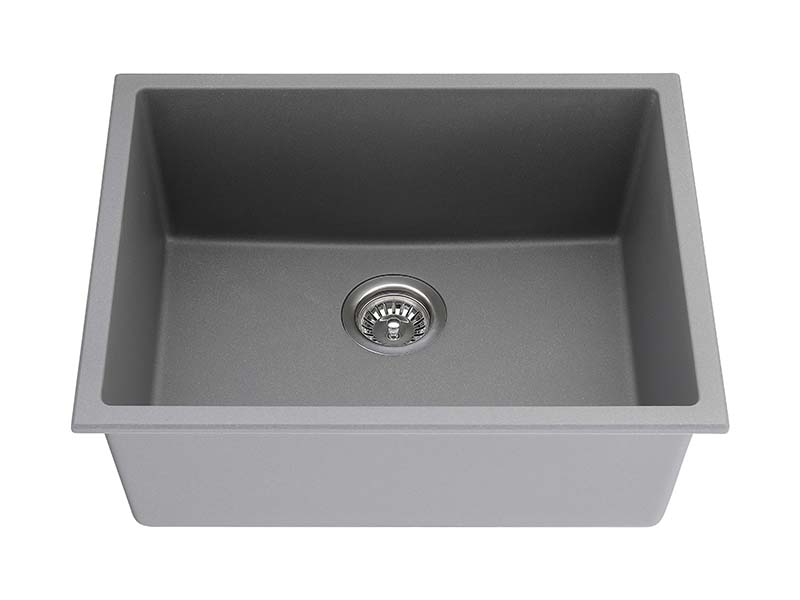
Fixing an Undermount Sink usually comes down to one thing: making sure it is properly supported again. When an undermount sink starts to loosen, drop slightly, or show gaps along the edge, it is rarely just a sealing issue. In most cases, the support underneath has weakened, or the original fixing method was not strong enough for long-term use. This is especially important with a quartz sink, because quartz is heavier and needs a more stable installation. A Grey Undermount Sink is a good example here. It combines a clean undermount look with a solid quartz body, which means both appearance and structure depend on how well the sink is fixed from below.
Undermount sinks do not sit on top of the countertop. They hang below it. That clean edge is what many people like, but it also means the sink relies on brackets, adhesive, and support inside the cabinet. If any of these parts fail, the sink may shift.
In daily use, the stress is constant. Water weight, dishes, and even small impacts from cookware all add up. Over time, weak adhesive, loose clips, or poor cabinet support can lead to problems. You may notice a small gap at first, or feel slight movement when pressing the sink. That is usually the early sign that the fixing system needs attention.
Before repairing, it helps to look at what actually failed. Sometimes it is just the seal line breaking. Other times, the sink has dropped because the support system underneath is no longer holding.
With a quartz model like this grey undermount sink, the size and weight make a difference. It measures around 23 × 18 × 9 7/8 inches, which gives a deep and practical bowl, but also means the sink needs stable support across its entire base. If the repair only focuses on sealing the edge without fixing the support, the issue will likely come back.
The repair process is not complicated, but it needs to be done in the right order. First, the sink has to be held in place again. This usually means supporting it from below with a temporary brace or board inside the cabinet. Without that step, it is difficult to align the sink correctly.
Once the sink is back in position, the old sealant should be removed completely. Any leftover residue will weaken the new bond. After cleaning the contact area, new adhesive and sealant can be applied, and the sink can be fixed securely again.
The key point here is that the sink should not rely only on glue. A proper repair includes mechanical support such as brackets or a support frame. The sealant keeps water out, but the support system carries the weight.
Quartz sinks are popular because they feel solid, resist stains, and handle daily use well. The same material also means more weight compared to many basic sinks. That is why the fixing method matters more.
This grey undermount sink is designed for durability, with a dense structure and good resistance to scratches and heat. But those advantages only hold if the sink stays properly fixed in place. If the support is weak, even a high-quality sink will not perform as expected in long-term use.
For buyers and installers, this is one of the most practical points. The product itself can be reliable, but the installation has to match it.
One common mistake is using sealant as the only fixing method. It may hold for a short time, but it is not designed to carry the full weight of the sink. Another issue is skipping surface cleaning before resealing. Adhesive does not bond well to dirt, grease, or old silicone.
Rushing the process is also a problem. If the sink is used before the adhesive has fully cured, the bond may weaken early. These small details are often the reason why some repairs fail again after a short period.
If the sink has only a small gap but still feels stable, a reseal may be enough. But if there is visible movement or the sink has dropped, it is better to redo the fixing properly. That means rebuilding the support and making sure the sink is aligned and secured correctly.
With an undermount design, alignment is important. The sink edge should sit evenly under the countertop opening. If it is off, even slightly, it affects both appearance and sealing performance.
For distributors and project buyers, sink fixing is not just a repair issue. It affects installation quality, customer satisfaction, and long-term product perception. A sink that becomes loose too quickly can lead to complaints, even if the material itself is good.
That is why it helps to look at both the product and the installation method together. A quartz undermount sink like this one offers a clean look and strong performance, but it needs the right support system to match. When that is done properly, the sink performs as expected and holds up well in daily use.
So, how to fix undermount sink? The practical answer is to support it properly, clean the bonding area, realign it carefully, and secure it again with both mechanical support and sealant. A quick patch may hide the issue, but a proper fix solves the real problem.
If you are working on kitchen projects or sourcing undermount quartz sinks, it is worth considering both product quality and installation method together. If you want help choosing a more suitable sink solution or improving installation reliability, feel free to contact us. We can help you find a better match for your market and application needs.
Previous:

 Mobile Phone:
 Contact Now